
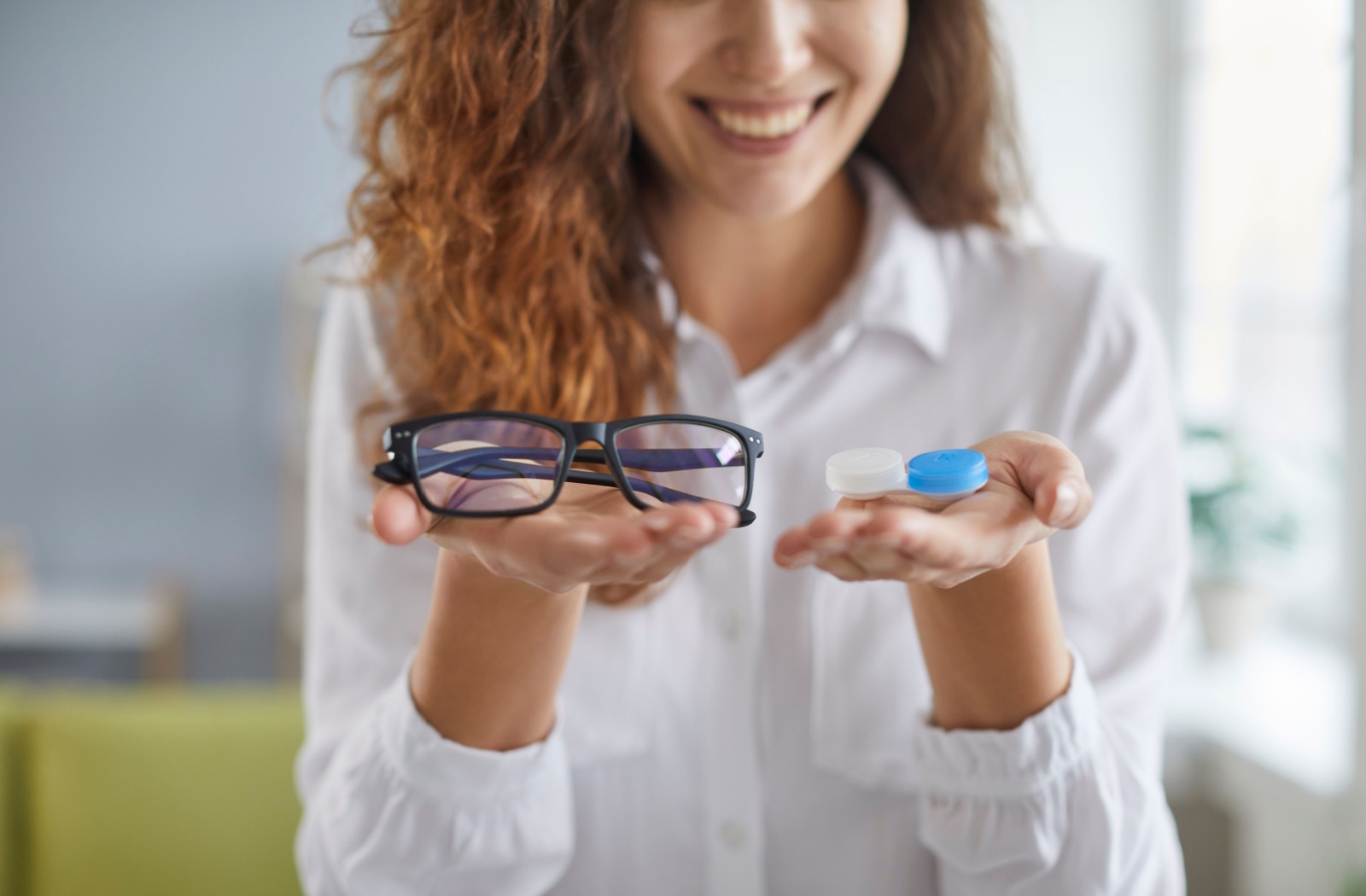
If you wear glasses and are thinking about trying contact lenses, you might wonder if you can use your current prescription to buy them. It’s a common question the team at Vision For Life Eyecare hears. After all, both are designed to help you see clearly, and you might think your glasses prescription has all the needed information.
However, the 2 types of prescriptions are not the same, and they cannot be used interchangeably. Your prescription for glasses is different from your prescription for contact lenses because of where they sit in relation to your eyes. This small difference in distance changes everything about the measurements required for a comfortable and effective contact lens fitting.
The Short Answer: A Clear No
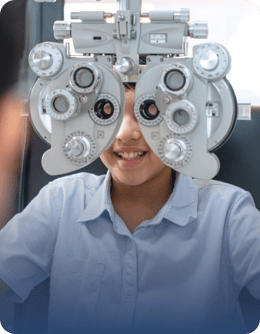
You may think that vision correction is the same no matter what you wear, but your prescription for glasses is very different from that for contact lenses. The main reason is simple—glasses sit a short distance away from your eyes, while contacts rest directly on their surface. That small gap changes the power needed to help you see clearly, which is why a comprehensive eye exam is different from a simple sight test.
What Makes a Contact Lens Prescription Different?
A contact lens prescription includes specific details that you will not find on a glasses prescription. These extra measurements help an optometrist find a lens that fits your eye’s unique shape. A proper fit is key for comfortable and healthy wear throughout your day, and it’s a core part of the personalized eye care you should expect.
Measurements for a Custom Fit
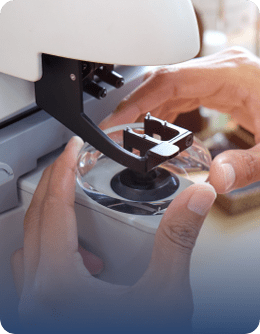
To find the right lens for you, an optometrist takes special measurements of your eye’s surface. These details help the lens fit comfortably and stay in place.
- Base curve (BC): This number shows the curvature of the contact lens. It’s chosen to match the curve of your cornea so the lens sits just right.
- Diameter (DIA): This is the width of the contact lens from edge to edge. This number helps determine whether the lens is the right size to cover your cornea properly.
An ill-fitting lens can slide around on your eye, causing inconsistent vision and irritation. It can also be too tight, which may restrict oxygen flow to your cornea. Your optometrist’s measurements help you avoid these issues.
Specific Lens Brand and Material
Your prescription also names the exact brand and type of contact lens you’ve been fitted for. Different lenses are made from different materials, and some allow more oxygen to reach your eye than others. Your optometrist chooses one that is well-suited for your eyes and lifestyle, keeping contact lens safety in mind.
Corrections for Astigmatism & Near Vision
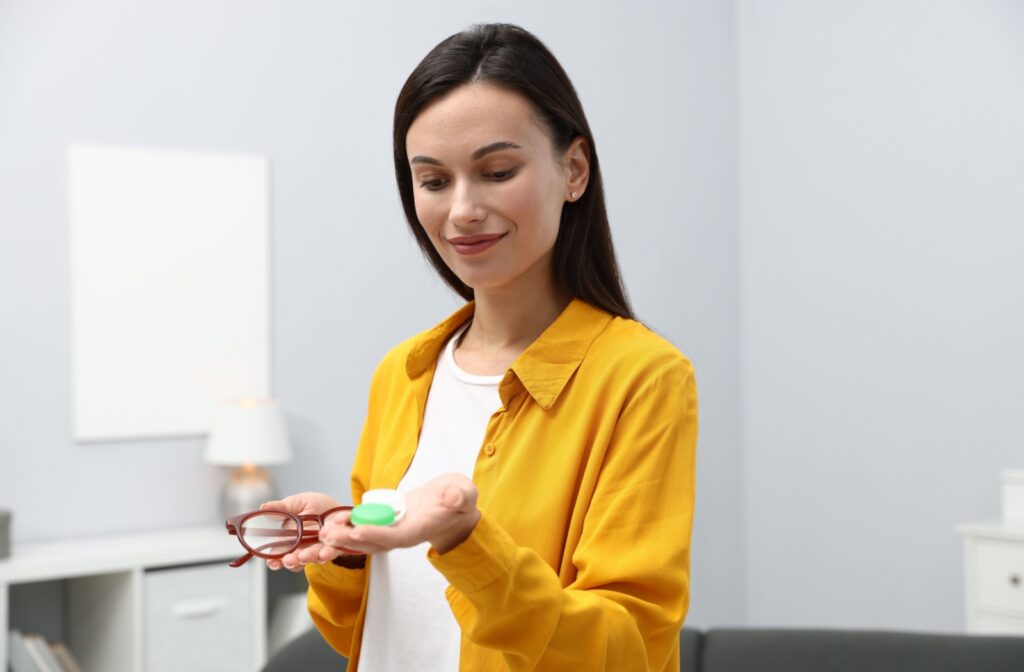
If you have astigmatism or need help with reading vision, those numbers on your prescription can also differ between glasses and contacts. The values used to correct astigmatism—the cylinder and axis—are calculated differently for a lens that moves with your eye.
Similarly, if you use bifocal or multifocal lenses, the “add” power that helps you see things up close is tailored specifically for either glasses or contacts. This is often addressed during eye exams, where changing vision needs are assessed. The design of these lenses is quite different, so the prescriptions must be too.
For multifocal contacts, the design often uses concentric circles of different powers. This allows your brain to automatically select the focus you need, whether you’re looking at a distant sign or a menu up close. Getting these zones placed correctly is another reason a specific contact lens prescription is so important.
The Importance of a Separate Contact Lens Fit
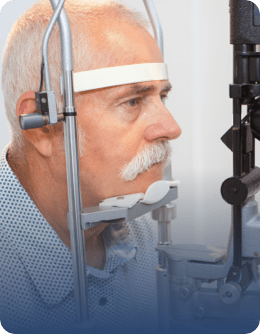
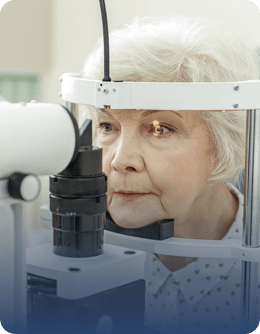
A contact lens is a medical device, and a proper fit is key to keeping your eyes healthy and your vision sharp. During a contact lens fitting, an optometrist performs tests that are not part of a standard eye exam for glasses. These extra steps are why you cannot convert a glasses prescription to a contact lens prescription on your own.
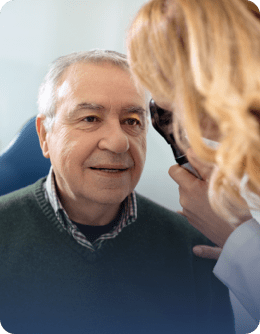
The fitting process often includes a trial period with your new lenses. You get to wear them in your daily environment to see how they feel and perform. A follow-up visit allows the optometrist to check your eye health and confirm that the fit and vision correction are just right for you.
A professional fitting helps confirm your lenses are not only effective but also safe and comfortable for you to wear all day. The optometrist checks how the lens moves on your eye and confirms it fits correctly. This process helps you enjoy the freedom of contact lenses without compromising your eye health.
Try Contact Lenses Today
If you are interested in trying contact lenses or need an updated prescription, the team at Vision For Life Eyecare can guide you through your eye care journey. Schedule a contact lens fitting to find the right option for your eyes and lifestyle.