

Key Takeaways
- Demodex mites are tiny mites living in your lash follicles and skin oil glands.
- Demodex blepharitis comes from an overgrowth of these mites, which can irritate your eyelids.
- Signs include red eyelids, dandruff-like buildup at your lash line, and itchy or burning eyelids.
- Your optometrist can check your lashes with a microscope to spot the mites.
- Prescription eye drops and daily eyelid care can help ease your symptoms.
Itchy, flaky eyelids are easy to blame on allergies or a long day. Our team at Vision for Life Eyecare often hear about eyelids that itch and flake along the lash line for months before people find out why.
Demodex blepharitis is eyelid inflammation that happens when tiny mites living in your lash follicles and oil glands grow past their usual numbers. A comprehensive eye exam lets your optometrist check whether these mites are behind your discomfort.
What Are Demodex Mites?
Demodex mites are so small you can’t see them without a microscope. They live in your lash follicles and in the oil glands of your skin.
It’s perfectly natural to have some of these mites. Most adults carry a few, and in small numbers they don’t usually cause problems. Irritation can start when they multiply and crowd the base of your lashes.
How It Differs from Regular Blepharitis
Blepharitis is the general term for inflamed eyelids. It can come from bacteria or blocked oil glands, and Demodex blepharitis is the form linked to a mite overgrowth.
When the mites pile up, the waste and debris they leave behind can irritate the edge of your eyelid. They may also make existing dry eye worse by affecting your meibomian glands. These small oil glands along your eyelids help keep your tears from drying out too quickly.
This condition is common, yet it often gets overlooked. A close look from your optometrist can help bring it to light.
Signs and Symptoms of Demodex Blepharitis
Some signs show up when you look in the mirror. You may notice these changes:
- Red, irritated eyelid rims
- Flaky, waxy buildup that wraps around the base of your lashes
- Lashes that fall out more than usual
- Styes that keep coming back
How Your Eyes May Feel
Other symptoms are easier to feel than to see. You might notice:
- Itchy eyelids
- A burning feeling along your lash line
- A gritty sensation, as if something’s stuck in your eye
Why Demodex Blepharitis Deserves Attention
Itchy eyelids might sound like a small bother. However, Demodex blepharitis may contribute to inflammation on the surface of your eye. Constant burning and itching can make it harder to read or focus on a screen. Some people rub their eyes often, which can irritate the skin even more.
Early care helps keep your eyelids comfortable, so you can focus on the moments you enjoy.
How Your Eye Doctor Checks for Demodex
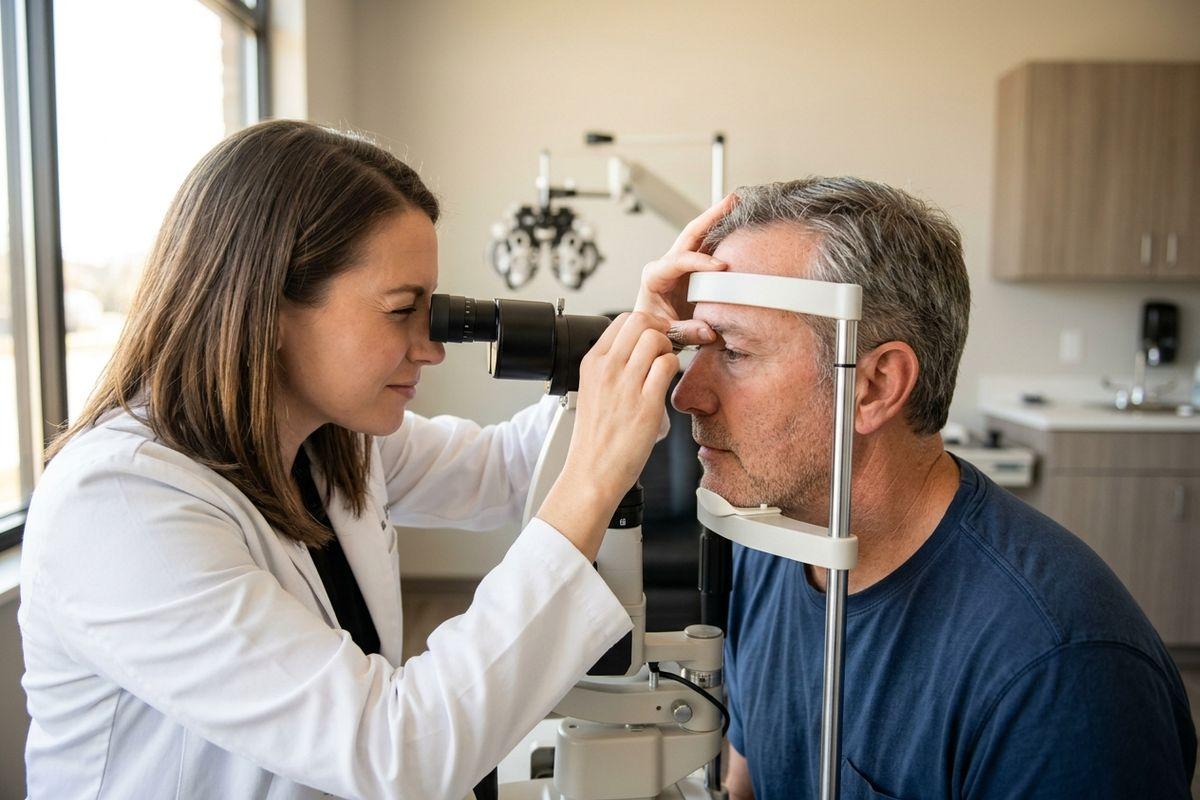
Your optometrist starts with a close look at your lashes, watching for dandruff-like buildup at the base. We can then use a microscope to spot the mites themselves.
Book an appointment if your symptoms persist or worsen, especially if warm compresses and eyelid cleansers haven’t helped.
Treatment Options for Demodex Blepharitis
Treatment usually combines in-office care with a routine you follow at home.
Prescription Eye Drops
Some eye drops are made to target Demodex blepharitis. They can help ease redness, swelling, and discomfort along your eyelids. Your optometrist can explain whether these drops suit your needs.
Daily Eyelid Care at Home
A simple at-home routine can support your treatment. Try adding these steps to your day:
- Hold a warm compress over your closed eyes for a few minutes to loosen buildup.
- Clean your lash line with an eyelid cleanser your optometrist recommends.
- Wash your pillowcases and face towels often.
- Replace old mascara and eyeliner, and don’t use eye makeup during flare-ups.
Book an appointment if your symptoms keep returning or won’t settle. Your optometrist can build a personalized care plan around your eyes, your routine, and your comfort.
Let’s Soothe That Eye Irritation
Demodex blepharitis is common, and treatment can help once you know mites are involved. Keep up your eyelid routine even after your symptoms settle, since it can help reduce flare-ups.
Our team at Vision for Life Eyecare can examine your lashes up close and talk you through care that fits your life. If your eyelids keep itching or flaking, book an eye exam and find out what’s behind the irritation.